

Listening to Burnout: A Jungian Perspective on the Nervous System and the Psyche
"The privilege of a lifetime is to become who you truly are."
— Carl Gustav Jung
What If Burnout Is Trying to Tell You Something?
What if burnout is more than exhaustion?
What if the fatigue, brain fog, emotional numbness, and loss of motivation are not simply signs that you have been doing too much—but also messages from your nervous system and your psyche?
In today's culture, burnout is often viewed as a problem of productivity. We are encouraged to manage our time more efficiently, improve our work-life balance, or become more resilient. While these strategies can certainly help, they often overlook a deeper question:
What if burnout is not simply asking us to do less, but to live differently?
From a neuroscience perspective, burnout reflects a nervous system that has remained in a prolonged state of stress without sufficient opportunities for recovery. From a Jungian perspective, burnout may also represent the psyche's attempt to restore balance when we have become disconnected from our authentic selves.
Rather than viewing burnout solely as something to overcome, we might begin by listening to what it has to say.

When the Nervous System Can No Longer Keep Pace
Our autonomic nervous system is constantly scanning our environment for cues of safety and danger.
When challenges arise, the sympathetic nervous system prepares us to respond through the familiar fight, flight, or freeze response. Stress hormones such as adrenaline and cortisol increase our heart rate, sharpen our attention, and mobilize energy so that we can adapt to changing circumstances.
In healthy cycles, once the challenge has passed, the parasympathetic nervous system restores balance. Our breathing slows, digestion resumes, muscles relax, and the body returns to a state of safety.
Burnout develops when this cycle is interrupted.
Weeks, months, or years of chronic stress can leave the nervous system in a state of prolonged activation. For some, this appears as persistent anxiety, restlessness, irritability, and hypervigilance. For others, the nervous system shifts toward collapse, resulting in profound fatigue, emotional numbness, reduced motivation, and a sense of disconnection.
The body is not failing.
It is communicating that its resources have been depleted.
The Symptoms We Often Ignore
Burnout affects every dimension of our lives.
Physically, it may appear as chronic fatigue, headaches, muscle tension, digestive difficulties, sleep disturbances, or frequent illness.
Emotionally, we may become anxious, irritable, detached, cynical, or unable to experience joy.
Cognitively, concentration becomes difficult. Decisions feel overwhelming. Creativity diminishes. Even simple tasks require tremendous effort.
These symptoms are often misunderstood as personal weakness.
They are not.
They are the nervous system's attempt to protect us after carrying more than it was designed to sustain.
The Persona: When We Become the Role We Play
Jung described the persona as the social face we present to the world. It allows us to function in our families, professions, and communities.
Problems arise when we begin believing that the persona is who we are.
Many people vulnerable to burnout have become identified with roles such as the achiever, the caregiver, the perfectionist, the dependable colleague, or the one who always remains strong.
These identities are often rewarded by society.
Yet maintaining them requires tremendous psychological energy.
When our worth becomes tied exclusively to performance, the nervous system rarely experiences genuine rest.
Even in moments of stillness, an internal voice whispers that we should be accomplishing something.
The Shadow: What Exhaustion May Be Protecting
Jung understood the shadow as those aspects of ourselves that have been pushed outside conscious awareness.
The shadow is not simply our flaws.
It also contains our vulnerability, creativity, tenderness, anger, grief, spontaneity, and need for rest.
Many people learn early in life that certain emotions or needs are unacceptable.
Perhaps we learned to be strong instead of vulnerable.
Responsible instead of playful.
Productive instead of reflective.
Over time, these neglected parts do not disappear.
They wait.
Sometimes burnout is the psyche's way of insisting that they finally be acknowledged.
Burnout as the Psyche's Attempt to Restore Balance
One of Jung's most profound ideas is that the psyche is naturally self-regulating.
Whenever one aspect of our personality becomes overdeveloped, the unconscious seeks balance.
This process is known as compensation.
Someone who has spent years living exclusively through achievement, responsibility, or productivity may eventually find themselves unable to continue.
Although burnout feels like something has broken, Jung might ask whether something within us is actually trying to heal.
Perhaps exhaustion is inviting us to reclaim creativity.
Perhaps anxiety is asking us to establish boundaries.
Perhaps emotional numbness is protecting us until we are ready to feel grief.
Symptoms often carry wisdom when we become curious enough to listen.
Burnout During Life Transitions
Burnout frequently appears during life's thresholds.
Immigration.
Parenthood.
Career transitions.
Caregiving.
Loss.
Retirement.
These are liminal spaces—times when an old identity no longer fits and a new one has not yet fully emerged.
While these transitions place tremendous demands on the nervous system, they also invite profound psychological growth.
Jung viewed such periods as opportunities for individuation—the lifelong unfolding of the authentic Self.
Rather than resisting uncertainty, we may begin asking what new possibilities are trying to emerge.
Relationships That Restore
Healing rarely occurs in isolation.
Our nervous systems regulate through relationships.
Safe relationships help us feel seen, understood, and accepted without requiring constant performance.
Healthy therapy offers this same relational experience.
Rather than demanding more from us, therapy creates space for reflection, curiosity, and compassion.
As the nervous system begins to experience safety, the psyche often feels free to express what has remained hidden beneath years of constant striving.
From Survival to Wholeness
Healing burnout is not simply about returning to work with greater efficiency.
It is about restoring our relationship with ourselves.
This may include slowing down, setting healthier boundaries, reconnecting with creativity, spending time in nature, paying attention to dreams, engaging in meaningful relationships, and cultivating rhythms of work and rest that honor both body and psyche.
Most importantly, healing asks us to shift from asking,
"How can I keep pushing?"
to asking,
"What kind of life is my psyche asking me to create?"
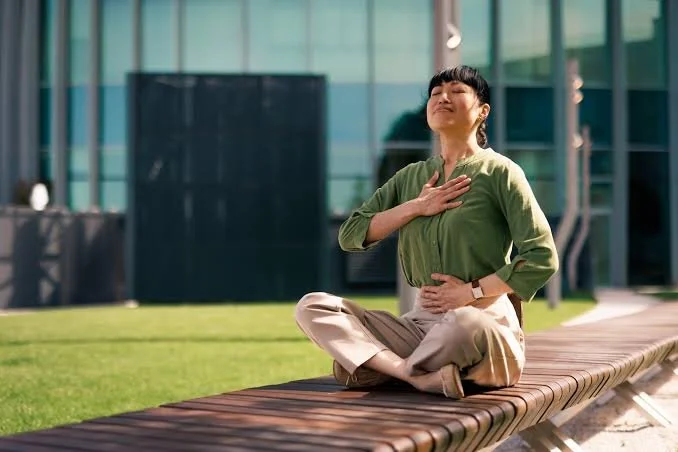
Listening to Burnout
Burnout is not merely a failure of resilience.
It is often a profound invitation.
An invitation to listen.
To rest.
To grieve.
To rediscover forgotten parts of ourselves.
To question identities that no longer fit.
To become more fully who we are.

As the nervous system gradually recovers and the psyche reconnects with its deeper wisdom, burnout can become more than a period of exhaustion. It can become the beginning of transformation.
In Jungian psychology, this lifelong movement toward authenticity is called individuation. It is not about becoming perfect; it is about becoming whole.
Sometimes, what feels like the end of our capacity is actually the beginning of our deepest healing.
~Dr. Nadia Thalji