
I Emote, Therefore I Am
Feeling, Migration, and the Search for Meaning in Unsettled Times
Western psychology has long inherited a philosophical assumption that to think is to exist. This idea traces back to René Descartes, whose declaration Cogito, ergo sum—I think, therefore I am—placed rational thought at the center of human identity.
Yet for many people, across cultures and across generations, existence has never been primarily cognitive.
It has been felt.
This insight sits at the heart of the work of António Damásio, whose research reframes consciousness as an embodied, emotional process. Often distilled as “I feel, therefore I am” or “I emote, therefore I am,” Damásio’s work challenges the idea that reason alone grounds the self.
In his book Descartes’ Error, he demonstrates that emotion is not a disruption of rationality, but its foundation. People who lose access to emotional processing may still think clearly, yet struggle to decide, to relate, and to live with coherence.
We are, as he writes, “feeling beings who think.”
Migration, Diaspora, and the Felt Self
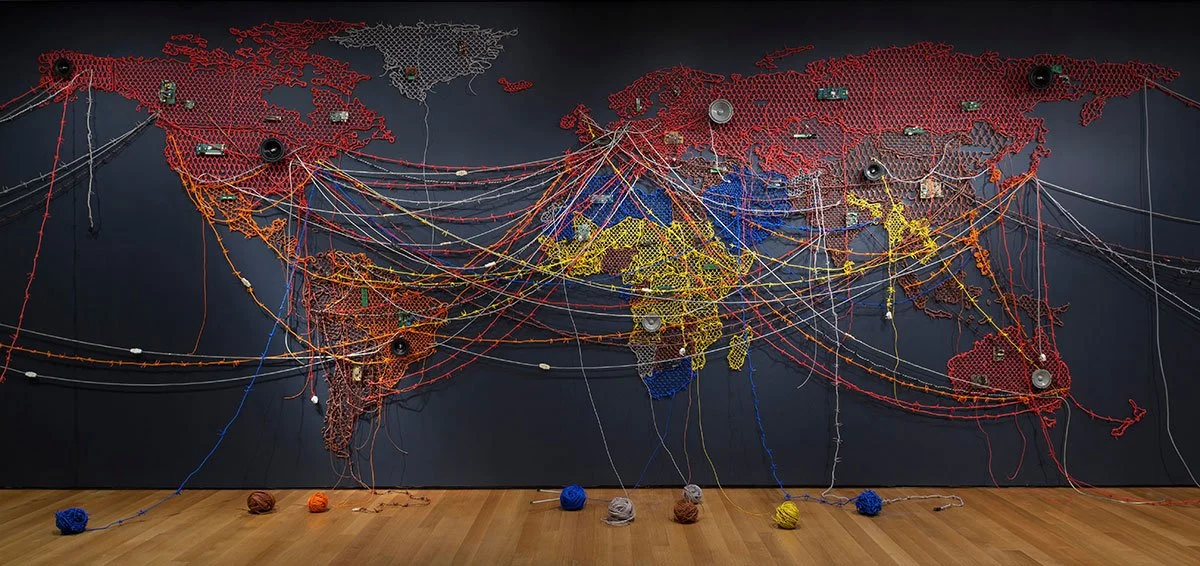
From an intercultural perspective, this framing resonates deeply with the psychology of migration and diaspora. For many immigrants and bicultural individuals, identity is not held together by a single narrative or belief system, but by emotional memory carried in the body.
The feeling of home is often not a place or a thought—it is a sensation.
The sense of belonging is not an idea—it is relational and visceral.
Loss, displacement, and longing are not abstract concepts—they live in posture, breath, tone of voice.
When someone migrates, parts of the self may become emotionally suspended. Cultural codes shift. Emotional expression may be muted for survival. Language itself may fail to capture what is felt. In these contexts, emotional disconnection is not pathology—it is adaptation.
To say “I emote, therefore I am” is to honor the truth that many identities are held together through feeling long before they are organized through words.
Spiritual Traditions and Embodied Knowing
Many spiritual traditions across the world have always understood what Western neuroscience is now articulating. Wisdom has lived in breath, rhythm, ritual, and sensation—not just doctrine or belief.
In Sufi traditions, the heart (qalb) is a center of knowing.
In Indigenous cosmologies, emotion, land, and spirit are inseparable.
In Afro-Brazilian, Afro-Caribbean, and African diasporic traditions, the body remembers what history has tried to erase—through movement, song, and collective rhythm.
These traditions do not ask “What do you think?” first.
They ask “What is moving in you?”
Damásio’s work bridges neuroscience with this ancient understanding: consciousness emerges from the body’s continuous sensing of life itself.
The U.S. Zeitgeist: Thinking More, Feeling Less
In the current U.S. cultural moment, many people are thinking constantly—analyzing, consuming information, debating, defending positions—yet feeling increasingly disconnected.
The nervous system is under sustained pressure: political polarization, economic uncertainty, racial and cultural reckoning, climate anxiety, and ongoing collective grief. Add to this the acceleration of digital life and artificial intelligence, and many individuals report a growing sense of numbness, disembodiment, or emotional overload.
In clinical spaces, this often shows up as:
Emotional fatigue masked as productivity
Anxiety without clear cause
A sense of “functioning” without aliveness
Difficulty accessing joy, grief, or meaning
These are not failures of intelligence. They are signals of nervous systems that have been asked to endure without adequate space to feel.
Clinical Reflections
In psychotherapy, when clients say “I don’t feel like myself,” the work is rarely about correcting thoughts. It is about restoring a felt sense of being—through safety, pacing, and relational presence.
Especially for those shaped by migration, trauma, or cultural marginalization, reclaiming feeling can be both healing and unsettling. Emotion carries memory. It carries history. It carries stories that were never fully spoken.
Therapy, from this lens, becomes a space where feeling is not rushed, judged, or instrumentalized—but listened to.
As emotional life returns, thought reorganizes itself naturally. Meaning follows sensation. Identity emerges not as an idea, but as an experience.
Remembering What It Means to Be Human
To say “I emote, therefore I am” is not to reject reason. It is to place reason back into relationship—with the body, with culture, with history, and with the present moment.
In times that ask us to think faster, produce more, and react constantly, this perspective offers a quiet resistance.
Before we explain who we are,
before we defend or justify,
before we decide what we believe—
we feel that we are alive.
And that feeling is where healing begins.