
The Creative Process of Onfalopsico
A Delphic Analysis of Metaphoric Sensibilities.
Nadia Thalji
The Artist Researcher
This article explores the ways in which the alchemical hermeneutic approach like, the creative process of an artist, is an intuitively guided experience. For Romanyshyn, hermeneutics makes use of the “science of soul” (p. 260), a methodology that implies the use of a “metaphoric sensibility” (p.27). In addition to intuitions, the alchemical hermeneutic method developed by Romanyshyn, includes in the research process; dreams, symptoms, feelings, and synchronicities. This approach engages the imaginal in the research process, and is familiar to my own creative process as a theater artist.
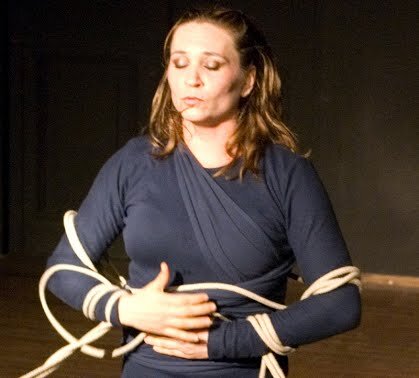
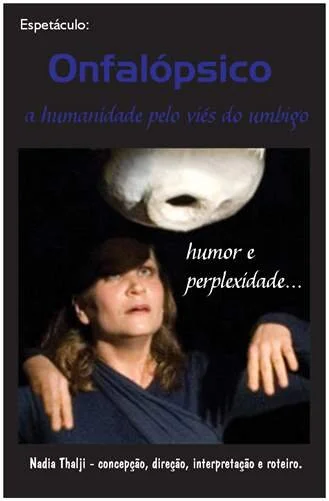
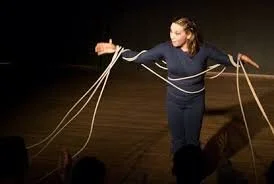
As part of a major project developed in the performing arts department of the University - Universidade Federal do Rio Grande do Sul (UFRGS) in Brazil, I created the performance “Onfalopsico”. In the process of creation, I engaged in a series of improvisations that led me to the encounter with the symbol of the “Omphalos”. Greek mythology relates how Zeus released two eagles from the eastern and western edges of the world and the two birds flew at exactly the same speed and met over Delphi. In that sacred center, was placed the ‘Omphalos’, a circular stone symbol, in the shape of a navel, and it was claimed to be the center of earth. This center, also known as the axis mundi, the tree of life, represents the connection of the imminence and transcendence.
The creative process of the performance was divided in three parts, the first stage was sensorial, an engagement that required cultivating Eros, witnessing and reverie. The second incorporated logos, giving space for the critic. The third and last stage was a dialogue between the witness and the critic between Eros and Logos. Initially, I had no idea what the symbol meant, and I maintained a state of reverie, allowing myself to be activated by it. At this point in time, I did not seek external influences to preserve the integrity of the process.
In the first stage of creative research, it was my body that engaged with the symbol, the ecstatic presence of the symbol was inspiring and a series of associations moved through me during a process that lasted several months. I recall working with the symbol as being an extension of my own body moving through the empty stage. The omphalos became a navel, a spiral, a thread, an umbilical cord, a center, a mandala. As I gave voice to it, and played with it, a pattern of learning emerged, there was a unique sense of interconnectedness and a grounding element in the archetypal motif of the mandala. In this state of reverie, I would let myself be led by the associations that emerged. At times, as if in a dreamlike state, the symbol would guide me through a series of associations that started giving shape to the performance. Something deep and engaging was coming across; there was an urgency, within the depth of the origins, to emerge and to be witnessed. For Coppin and Nelson (2005) depth psychology “draws one beneath the surfaces of thought, word, and action to the inclinations and impulses of the soul.” (p. 42).
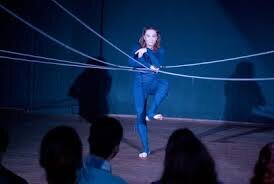
Embodied Image
In the creative process of the performance “Onfalopsico”, I found the playground of my childhood, I also found diversity, as I could perform all variety of creatures and even give voice to the inanimate world.
I revisited ancient times through mythology, gaining confidence in not relying on words, acting with all my physicality to an extent that words would only come to my mouth when they were embodied.
In my exploration I found rhythm and a deep respect for the power of sounds; I deconstructed language to find the primal and guttural sound that came from the origins. I became obsessed with what could be done with sound and with silence as well. Pauses were delightful, there was so much there, I danced with the associative imagery that unraveled and found the amazing nature of images and how they can invite more. An image is never static, it has movement, and it has an ecstatic presence when embodied.
In the second stage of the process that gave birth to the performance, I researched in the ARAS archives and in several other resources to find out that the navel/center of the earth was a recurrent theme to several civilizations. I had an epiphany and in a state of awe, I realized that I had tapped into the collective unconscious. I had gained access to Greek Mythology and the Mythology of several cultures. In the classical Hellenistic periods ‘the navel of the world, called the “Omphalos’ had a profound meaning and influenced all religions. There is a historical, cultural and mythical connection of the navel/omphalos with the axis mundi and tree of life. According to Ciholas (2003) the “axis of the divine center dominated the landscape of religions history” (p.11). Overall, this experience deepened my awareness of the transcendent function of the symbol.
The final stage of the research/performance process was the dialogue with the lunar and solar approach. The initial investment into the psychic material was more intuitive, hence a feminine approach. Second came discernment, logos, masculine energy and finally the third stage was the amalgamation of the intellect and the senses, bringing form to the unformed/formless experience. During the entire process, the imaginal acted as the mediator between the imminent and the transcendent. In Jung terms, the symbol holds together the tension between the unconscious and the conscious.
With the audience I experienced the power of witnessing and collective empathy.
My creative process meant freedom.
Living in such diverse places in the East/West and having so much to express, I found in theater a venue to heal my wounded soul. For over 20 years, theater was my source of healing, and with this particular encounter with the omphalos, came much growth.
The same commitment to soul held by me as an artist, transfers to my process of defining my dissertation topic and method. As an artist, I have learned to trust the creative process and work with what is being called from the depths to be witnessed. The work with the imaginal is being claimed now as a researcher. The Ukranian-Brazilian poet Helene Cixious says, “…always this urgency: to make resonate in our century the echo of this Voice that comes from the origins”.
The dissertation topic comes from the unfinished business of my ancestry, which was impacted by a history of multiple immigrations and the search for a sense of belonging. To some degree we all hold a sense of belonging to a landscape from where life came out, and depth psychology includes this awareness. This cosmic relatedness is deep in indigenous cosmologies, and we all unconsciously long to recover this sense of intimacy. Eliade (1960) shared his longing as “a profound feeling of having come from the soil, of having been born of the Earth in the same way that the Earth, with her inexhaustible fecundity, gives birth to the rocks, rivers, trees and flowers” (p.164).
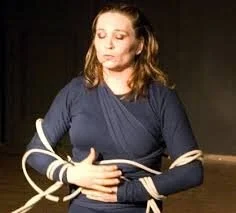
The Center
The imminent and the transcendent, mediated by the imaginal.
The archetypal motif of the navel of the earth come into account in the transference dialogue as a grounding center and is associated with the need to belong. This symbol is fused with potent psychic material and captures the archetypal expression of the center/circle or mandala. For Jung (1964), the archetypal motif of the circle or mandala is seen as “the totality of the psyche in all its aspects”. For the Peruvian Q’ero shamans, the mandala of stones called ‘mesa’ becomes the magic circle, the ‘temenos’ that holds unconscious material, where one can meet the archetypal contents that span across cultures. This way, the omphalos/navel/center brings to light the imminent and the transcendent, mediated by the imaginal. In the words of Clarice Lispector, a Ucranian-Brazilian writer, there is potential in “not knowing”:
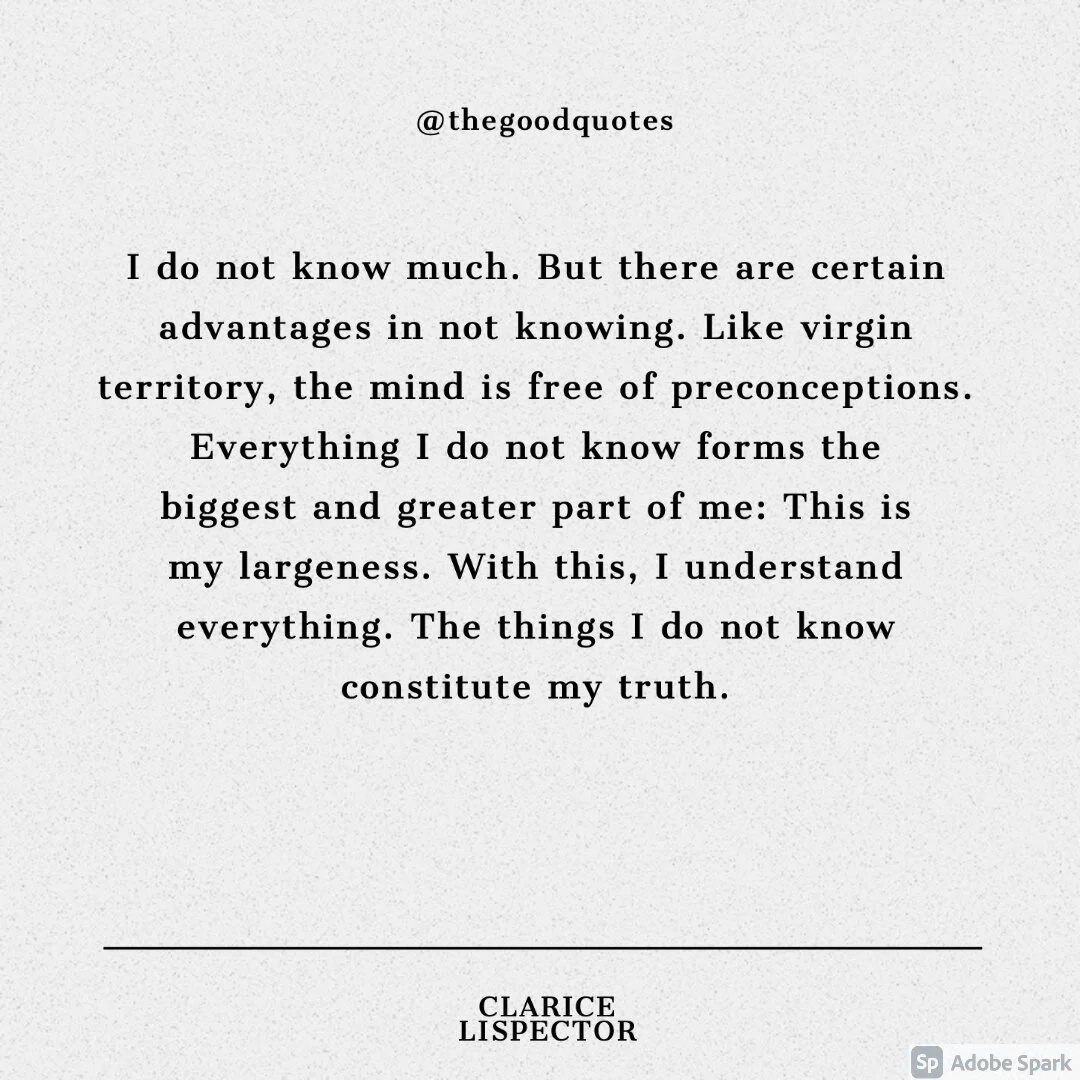
The potential in not knowing
Allows the emergence of potent psychic material of archetypal motifs.
The omphalos, or navel of the earth is a psychic center that helps me reconnect with place (horizontal plane) and recover a mystical unity (vertical plane) to our native earth. Jung, himself was transformed by the archetypal expression of the circle. In this way, to find the center of alchemical transmutation, the eagles must return to the edges of the east and west and meet again. In times of uncertainty and not knowing what to do next, the symbol provides me a link to the imaginal. The omphalos functions as a mediator where verticality and horizontality meet, where the abyss between subjective and objective find expression.
The Imaginal
The symbol provides me a link to the imaginal.
Deborah Bryon (2013), a Jungian analyst who researched the practice of Peruvian shamanism among the Q’ero shamans, found that they incorporate in their rituals a mandala called ‘mesa’. A ‘mesa’ is “a collection of individual sacred stones, or ‘quiyas’[…] which becomes a living representation of the medicine body”. Byron’s analysis is another demonstration of the mandala as represented by the ‘mesa stones’. For Byron, the ‘mesa stones’ is an expression of imaginally weaving the land into the belly in the body”. In Jung’s (1973) process of individuation, he explored the imaginal realm, and found deep meaning in the symbolic use of stones. His process of active imagination may correspond with the shaman’s ritualized mesa. Winnicott (1971) described this experience as a transitional psychological space existing between fantasy and reality. Like a mandala, the mesa becomes the magic circle, the ‘temenos’ that holds unconscious material, where one can meet the archetypal contents that span across cultures.
The transference field dialogue among therapists and patient or the researcher and the research is transforming. To engage in the transformative experience of the transference dialogues, the researcher must find ways to learn to take the position of the witness and give less power to the critic. According to Romanyshyn, the transference dialogues occur “as a ritual space of play [where] both the witness and the critic belong” (p.177).
References:
Coppin, J. & Nelson, E. (2005). The art of inquiry: A depth psychological perspective. 2nd revised ed. Putnam, Conn: Spring Publications, Inc.
Eliade, M. (1961). Mother Earth and the Cosmic Hierogamies. In Myths, dreams, and mysteries; the encounter between contemporary faiths and archaic realities. (p. 164). New York, NY: Harper.
Romanyshyn, R.D. (2007). The Wounded Researcher: Research with Soul in Mind. New Orleans, Louisiana: Spring Journal Books.
Winnicott, D.W. (1971/2005). Playing and Reality. 2nd Ed. New York: Routledge.